The place
Lisbon's Roman theatre
The Roman theatre on the castle slope: when it was built, how it was lost and found, and how it relates to the fado house built over it.
Book fado and tapas ↗Quick answer
Lisbon's Roman theatre was among the first buildings of the Roman city, built in the time of Emperor Augustus and remodelled under Nero. It was buried in the fourth century, exposed by the 1755 earthquake and excavated from 1964. Today it is part of the Museu de Lisboa. A fado house on Rua de São Mamede stands over the ancient theatre, but that evening does not include entry to the museum.
What stands under the slope
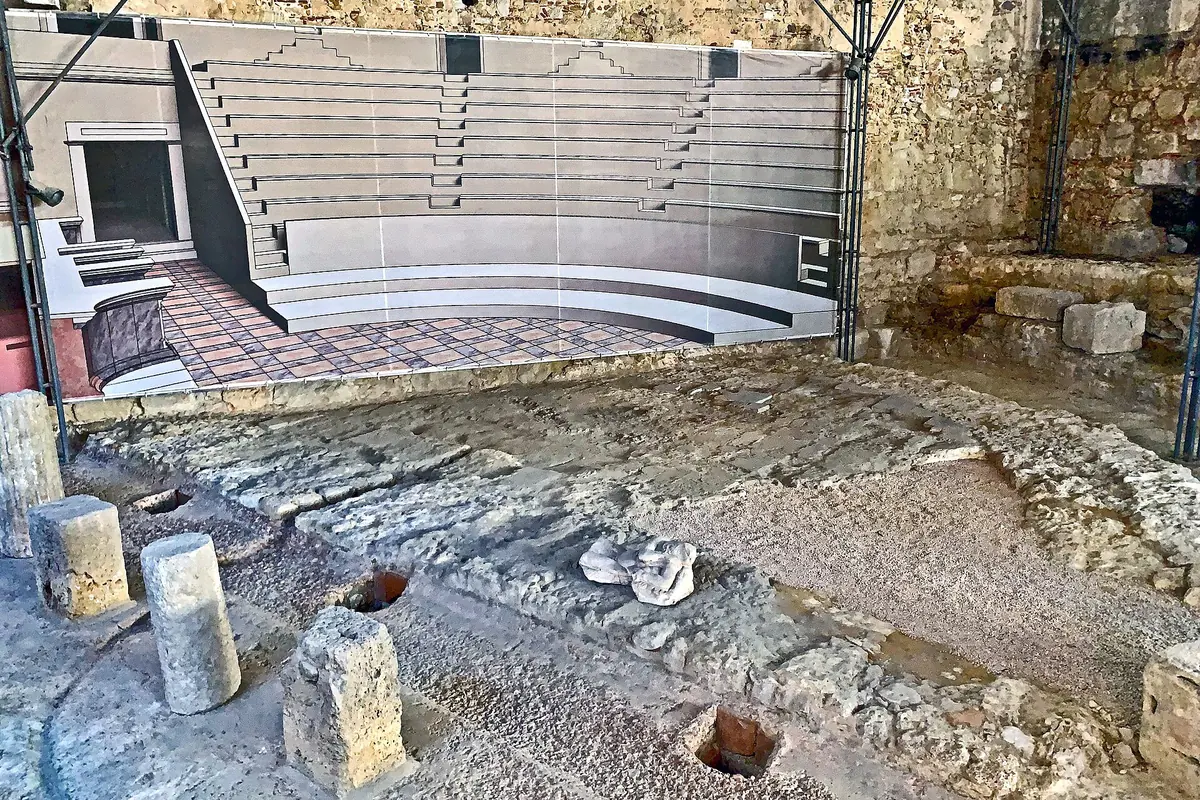
Under the hillside below São Jorge Castle lie the remains of a Roman theatre. Turismo de Lisboa says it was among the first buildings erected in the Roman city, during the time of Emperor Augustus, and that it was remodelled during the time of Nero. Wikipedia's article on Olisipo, the Roman name for Lisbon, adds that the theatre was restored in 57 AD on the order of Caius Heius Primus. It is the best-known trace of Roman Lisbon above ground level.
Lost and found
Turismo de Lisboa says the theatre was buried in the fourth century AD and completely forgotten by the city. The 1755 earthquake exposed the ruins, but no effort was made to preserve them, and the French invasions later buried them again. Excavation began in 1964 and led to new finds. A museum opened on the site in 2001, and a renovation between 2013 and 2015 produced the present Museu de Lisboa, Teatro Romano, which holds material from the Iron Age to the medieval period.
Part of the Museu de Lisboa
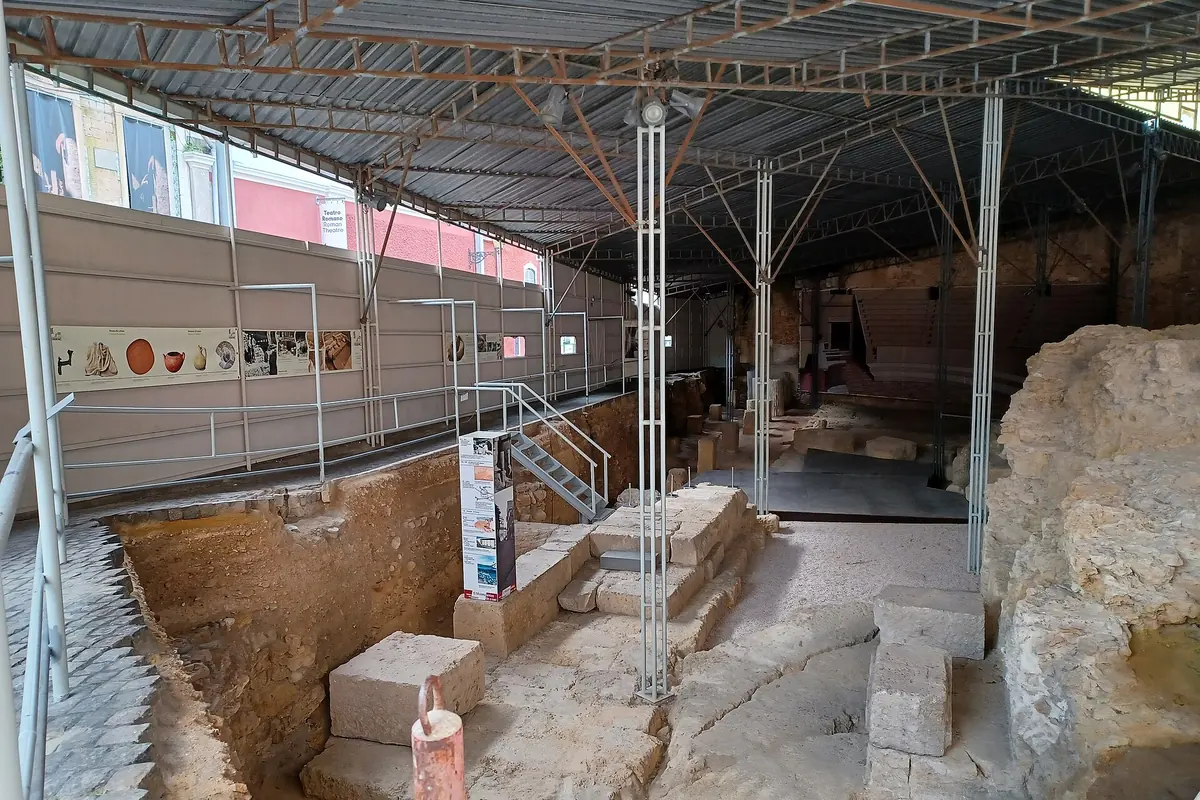
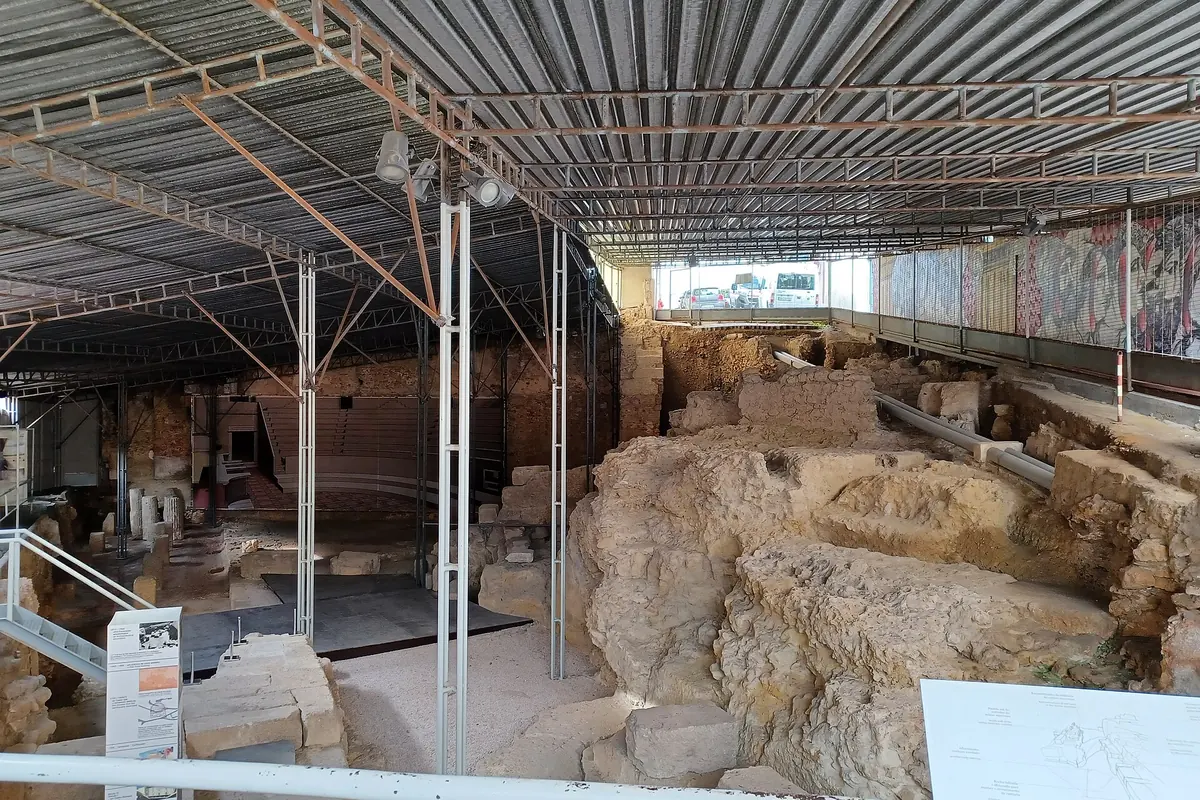
Wikipedia lists the Roman Theatre of Lisbon among the locations of the Museu de Lisboa, a museum network devoted to the history of the city. That makes it a museum visit of its own, with its own ticket and its own opening days, which are best checked on the museum's own pages. The ruins sit beneath a protective roof, with walkways above the excavated stonework. It is a place for a daytime visit, separate from an evening at a table nearby.
The house built over it
A fado house on Rua de São Mamede occupies a building above the ancient theatre. Turismo de Lisboa describes an eighteenth-century palace built on the Roman theatre on the hillside below the castle, and the booking page calls it a Pombaline building with high ceilings and original stone arches. Wikipedia uses the word Pombaline for the style of the rebuilding led by the Marquês de Pombal after the 1755 earthquake. Both descriptions put the house in the eighteenth century, and neither promises a view of the ruins from your seat.
What the ticket does and does not cover
The tapas-and-fado ticket is for an evening: fado, finger food and drinks at shared tables. It does not include entry to the Roman theatre museum, which is a separate attraction. The two sit on the same part of the hill, so a day can hold both, with the museum first and the table in the evening. If the history is what draws you, read the museum's pages for what you can see, and treat the fado night as a place that shares the ground, not the exhibit.
Seeing it from the hill
Alfama is the district that spreads down the hill from São Jorge Castle towards the river, and Wikipedia notes that the 1755 earthquake spared it. The streets here are narrow and steep, which is why a visit to the theatre and an evening nearby suit comfortable shoes. The cathedral, the Sé, marks the western edge of the district, and the castle looks down from above. Allow time to find your way on foot.
Read next: Fado etiquette for first-timers
What to read next
If the building and its story interest you, the Museu de Lisboa's own pages for the Roman theatre are the place for opening days, tickets and what the site shows. For the evening itself, this site's guides cover the music and the etiquette of a fado house, and the plates on the table. The hill gives a day plenty to fill: the ruins by day, the district at dusk and then dinner and fado close by, with a short walk between them.
Frequently asked questions
When was Lisbon's Roman theatre built?
Turismo de Lisboa says it was among the first buildings of the Roman city, built in the time of Emperor Augustus and remodelled under Nero.
Does a ticket to the fado night include the Roman theatre?
No. The Roman theatre is a separate museum, so entry is a separate visit.
When was the theatre excavated?
Turismo de Lisboa says excavation work began in 1964, after the 1755 earthquake had exposed the ruins.
Is the Roman theatre part of a museum?
Yes. Wikipedia lists it as one of the locations of the Museu de Lisboa.
Sources
- Turismo de Lisboa: its article on the Roman theatre under the castle slope
- Wikipedia article on Olisipo, Roman Lisbon
- Wikipedia article on the Museu de Lisboa and its sites
- Turismo de Lisboa: its page for the fado house on Rua de São Mamede
- Wikipedia article on the Pombaline style of rebuilding
- Wikipedia article on the Alfama district and its landmarks